Choose the agent and model
Use Claude Code, Codex and other compatible native agents in the same computer. Configure Hermes with the model and provider that fit the job.
Create agentsCompare Matrix / Meta Muse
Muse helps with life and connected services. Matrix gives projects a computer you can shape.
 Matrix OSKeep the workspace. Choose the agents.
One project. Work you can inspect.
A closer look
Official competitor artwork and actual Matrix Desktop screenshots. The artwork identifies each product; it is not a screenshot of its interface.
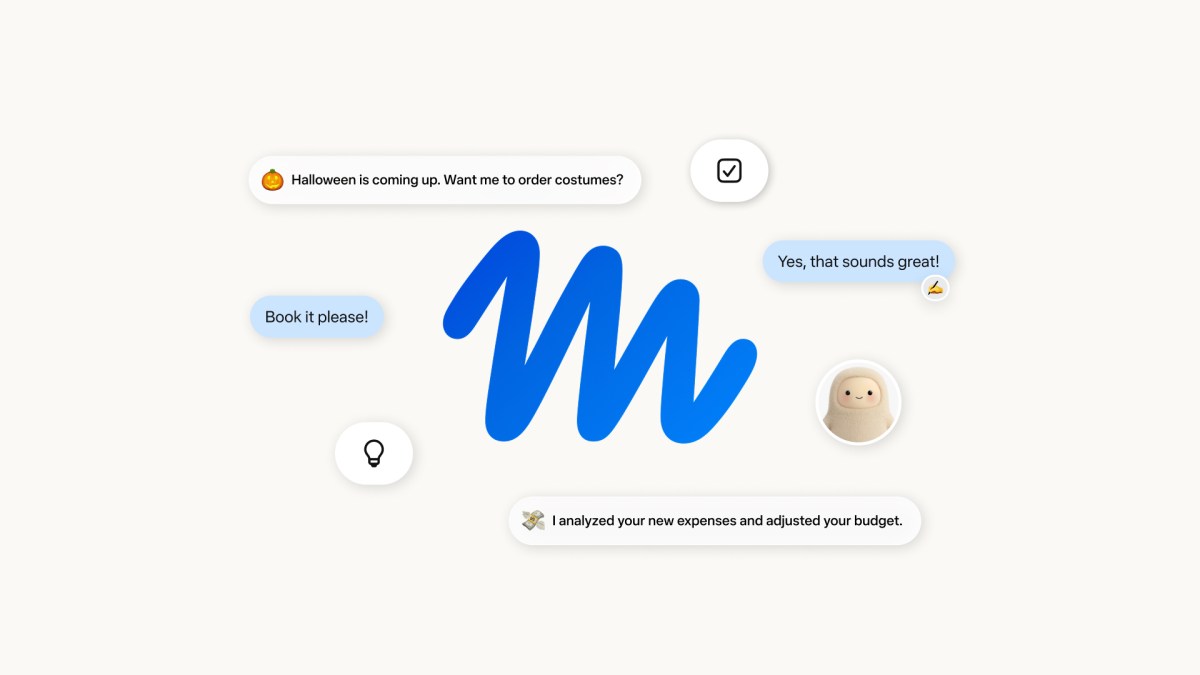
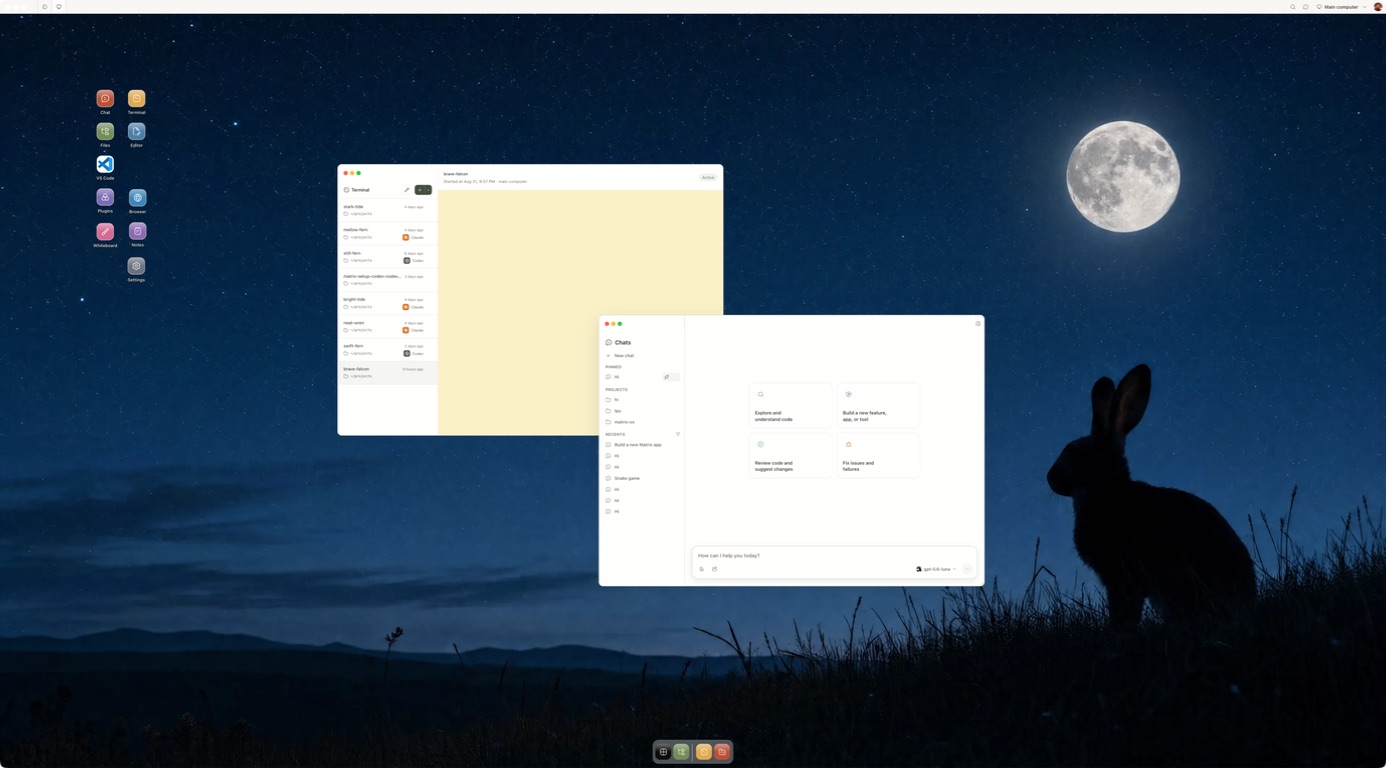
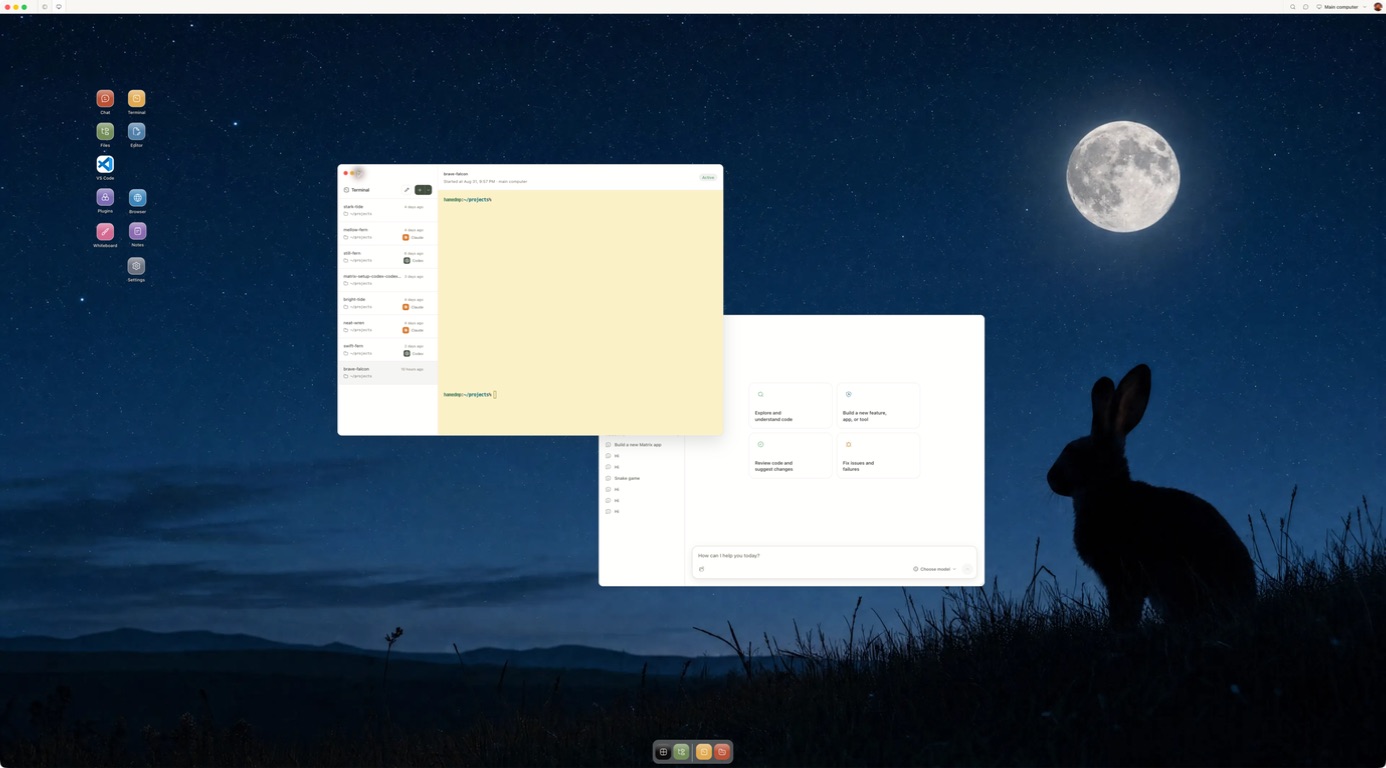
Competitor artwork is reproduced from public product materials for identification. Matrix images show the current Desktop product.
Why Matrix
Matrix is a place for agents to work across projects and providers. These are the practical reasons teams add it to their stack.
Use Claude Code, Codex and other compatible native agents in the same computer. Configure Hermes with the model and provider that fit the job.
Create agentsChoose the computer plan and model provider separately. Check each provider's usage and billing before a long-running job; Matrix does not promise a universal spend cap.
Matrix pricingGive connected services only the access a task needs. Inspect the workspace and review consequential output before it leaves your team.
Security and privacyWork on a persistent computer with files, browser, terminal and running services. Manual self-hosting on your own VPS is available in Preview, with different setup and feature coverage from managed Cloud.
Self-host PreviewShare live Chat or terminal sessions with owner, editor and viewer roles, so people can review the same work together.
CollaborationMatrix is built in Europe, supports EU and UK teams, and offers German compute locations for the computer. Check provider and connected service regions separately.
EU and UKAsk our team about the up-to-€1m guarantee program for qualifying engagements. Coverage and eligibility are supplied through sales.
Explore the programPractical checklist
Use these questions as a starting point. Product features and plan terms change, so check the provider before deciding.
| Question | Meta Muse | Matrix OS |
|---|---|---|
| At a glanceWhat is the durable product? | A personal assistant for ongoing goals across connected services. | A persistent computer for human and agent work. |
| Can you choose the agent? | Meta's Muse experience. | Claude Code, Codex and other installed native agents; Hermes has configurable model providers. |
| AccessWhere do you use it? | Muse's supported app and messaging surfaces; availability is staged. | Desktop, web, CLI and a phone browser for the same computer. |
| ToolsWhat can it use? | A dedicated Secure VM and browser, plus supported connected apps. | Files, browser, terminal, repositories and running services; connected actions depend on setup. |
| ContinuityHow does it keep working? | Personal memory, proactive suggestions and work that continues after the app closes. | Configured workflows and schedules; Builder and Max computers stay on, while Starter sleeps. |
| ControlWhat can you inspect or approve? | Meta describes approvals and an activity trail, including approval before its checkout flow. | Open the files, terminal and browser directly; set connected-service access and review consequential work. |
| Where does context live? | Muse's personal memory and connected context in Meta's service. | Saved chats, project files, instructions, skills and named sessions in the workspace. |
| OwnershipCan you host the runtime? | Meta-hosted Secure VM. | Managed Matrix Cloud or manual self-hosting in Preview, with different feature coverage. |
| Practical fitHow is it paid for? | Meta describes free use for most tasks and paid plans; check current terms and limits. | Computer plan plus any separate agent or model-provider charges. Check both before a long task. |
| What about the EU and UK? | Meta's September 2026 availability announcement names the US and Canada. | Built in Europe; EU and UK access with German computer regions available. Check connected providers separately. |
Framework adapted from Every's personal agents comparison; Matrix answers are based on our current product documentation.
The details
We publish these comparisons ourselves. Follow the linked product sources and test one task before you choose.
Meta Muse is a personal agent for ongoing goals across connected services. Matrix OS is a persistent computer for running the agents and tools you choose. Both can keep work moving after a chat closes, but they are built around different objects: Muse around the assistant and Matrix around the workspace.
Meta introduced Muse in its personal-agent announcement and expanded its connected-app story in a September 29 small-business update. This comparison uses those public descriptions as of September 29, 2026.
| Question | Meta Muse | Matrix OS |
|---|---|---|
| Core product | A personal AI agent | A persistent Linux computer for human and agent work |
| Computer | Muse's dedicated Secure VM and browser | Your inspectable files, browser, terminal, repositories and services |
| Focus | Everyday goals, planning, commerce and connected apps | Software projects, native agents and configurable connected workflows |
| Agent choice | Meta's Muse experience | Claude Code, Codex, OpenCode, Pi and other tools you configure |
| Context | Muse personal memory and connected context | Saved chats, files, instructions, skills and persistent sessions |
| Background work | Proactive suggestions and work that continues after closing the app | Always-on computers on Builder or Max; Starter sleeps |
| Payments | Meta describes Link and a one-time card for approved checkout | No general autonomous wallet or equivalent built-in checkout promise |
| September 29 region position | Meta describes availability in the US and Canada | Built in Europe, supporting EU and UK users; German compute regions |
Muse is easiest to understand as an assistant that can pursue a goal across time. Meta's examples span plans, messages, shopping and research. It describes a browser-equipped Secure VM, memory, user approvals and an audit trail. It also describes a checkout path using Link and a one-time card, with the user approving the purchase. This is a specific feature worth testing in the product; it does not imply unlimited spending access.
Meta's small-business announcement adds connectors for services such as Asana, Figma, Notion, Shopify, Slack, Stripe and Zoom. As with any integration list, check the exact actions supported and the permissions granted to Muse. For project work, Matrix keeps the files, browser and agent sessions in a computer you can operate.
Matrix is useful when the durable asset is your project environment. You can keep a repository, development server, browser, local files and multiple terminal sessions on a computer you can reopen. Run a native coding agent for one task, inspect the result, then continue with another agent in the same environment. Builder and Max provide an always-on computer; scheduled Hermes workflows and connected services require the relevant setup.
Matrix supports connections including Gmail, Calendar, Drive, GitHub, Slack, Discord, Granola and X with bounded actions. Those connections and saved instructions can support work beyond coding, but they do not reproduce Muse's personal memory, consumer integrations or payment flow. The Matrix introduction, Quickstart and integration guide describe the current product.
Matrix Cloud provides managed operation, and the runtime is open source with a manual self-host option in Preview. That matters if your team wants to inspect or extend the computer environment rather than take an agent's environment as given.
Meta's September 29 update says Muse is available in the US and Canada. It does not announce an EU or UK Muse launch. Matrix is built in Europe and supports EU and UK users, with German compute regions available during setup. Check the live signup and region selector for your account before planning a production workflow.
Start with Matrix if you need a computer you can operate directly, native coding-agent choice or project state that survives across sessions. Give an agent one small task with a reviewable output and explicit approval limits. Open the Matrix quickstart; for the wider field, see Dots vs Grok Bot vs Muse vs Matrix.
Inside Matrix
Start with a task you can review.
Meet Matrix OS