Matrix OS vs Google Colab for university AI labs: notebook or complete cloud environment?
Compare Matrix OS and Google Colab for university AI labs across notebooks, GPUs, setup, persistence, full-stack development, coding agents, governance, and teaching fit.
Google Colab is the better choice for notebook-centered machine learning, data science, and teaching that benefits from fast access to managed accelerators. Matrix OS is the better fit for courses that need a complete persistent Linux environment with repositories, terminals, applications, previews, and coding agents.
The products overlap around cloud access, but they optimize for different teaching objects: the notebook versus the computer.
These comparisons use consistent criteria and state when the alternative wins. Universities should validate privacy, identity, accessibility, retention, cost, and support directly.
At a glance
| Criterion | Google Colab | Matrix OS |
|---|---|---|
| Primary object | Hosted Jupyter notebook | Hosted Linux computer and workspace |
| Best subjects | ML, data science, interactive notebooks | Software engineering, agents, full-stack apps, multi-tool projects |
| Compute | Managed CPU, GPU, and TPU access subject to plan and availability | Selected VPS power and region; not a specialized accelerator notebook service |
| Persistence | Notebook and attached storage patterns; runtimes can terminate | Persistent files, sessions, repos, and processes on the Matrix computer |
| Setup | Very low for notebook workflows | More general environment with more configuration surface |
| Agents | Notebook AI features and code assistance | User-installed terminal coding agents in the workspace |
Where Google Colab is stronger
Colab is a hosted Jupyter Notebook service requiring little setup and providing access to compute including GPUs and TPUs. Google explicitly positions it for machine learning, data science, and education. See the official Colab FAQ.
For an instructor teaching tensors, model training, visualization, or a notebook-based assignment, Colab's focused environment can be exactly right. Students can open a notebook and begin without learning a full cloud machine.
Where Matrix is different
Matrix gives each participant a general-purpose development computer. A course can use Git repositories, multiple terminals, package managers, background services, browser previews, and coding-agent CLIs in the same environment.
This is useful for agent-native software engineering, full-stack applications, systems work, and projects that do not fit a sequence of notebook cells. Matrix's university solution describes the intended lab model.
Persistence changes course design
Colab says free resources are not guaranteed or unlimited and that usage limits fluctuate. This is reasonable for a broadly accessible notebook service, but instructors should design around runtime behavior and plan constraints.
Matrix is designed around a persistent computer, but universities still need explicit retention, reset, backup, and teardown policies. Persistence should not mean indefinite storage without governance.
Which should you choose?
Choose Google Colab if:
- the notebook is the natural assignment artifact,
- managed accelerator access matters,
- minimal setup is more important than a full environment,
- the course can operate within Colab's current runtime and policy constraints.
Choose Matrix OS if:
- students need Git, shells, services, and web previews,
- coding agents are part of the curriculum,
- projects must persist as complete environments,
- the course covers software systems rather than only notebooks.
Some programs will use both: Colab for focused notebook exercises and Matrix for durable projects. Avoid forcing one environment onto every learning objective.
Run a teaching pilot
Give a small cohort the same representative assignment. Measure time to first result, support requests, environment failures, accessibility, compute availability, student understanding, and quality of submitted evidence.
IREX reports that governed university AI pilots and systematic impact measurement remain limited in its readiness sample. Read the IREX findings. A comparison should therefore evaluate the operating model, not only the feature list.
Read “No more laptop roulette” or plan a university pilot.
Try a first task in Matrix
Run one course exercise and list whether it needs a notebook, terminal or persistent service.
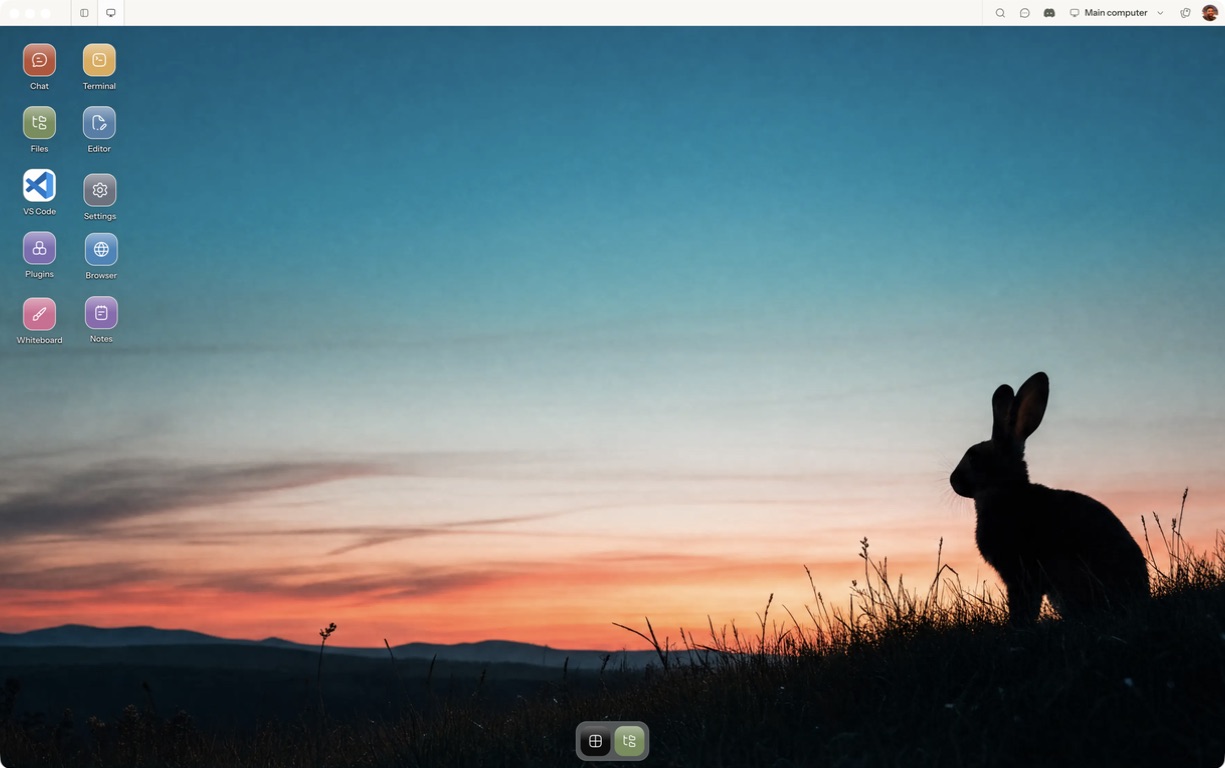
- Follow the quickstart to sign in, choose a computer and complete any required provisioning. To use the native app, follow the desktop installation and approval steps.
- Open a separate session with a small sample project or synthetic input. Configure the agent access needed for that task and make the expected output explicit.
- Check the learning outcome and access requirements before selecting a cohort platform.
For a worked coding example, use the setup and reconnect walkthrough. Inspect the result before expanding the scope or leaving a longer task unattended.
Open Matrix →Read the quickstart →Current plans and pricing →