No more laptop roulette: running AI-native courses in the cloud
How cloud development environments reduce setup drift across devices while giving AI-native courses persistent tools, repos, previews, and clearer support boundaries.
AI-native courses are unusually vulnerable to laptop roulette: one student has an unsupported operating system, another lacks administrator rights, a third has no space for a model or container, and half the room is running different dependency versions.
A cloud lab moves the execution environment out of the student's device. The laptop, tablet, or shared computer becomes an access surface; the course tools and project state live in a consistent hosted workspace.
Why AI courses amplify setup drift
Traditional programming courses already struggle with compilers, runtimes, package managers, and permissions. Agentic development adds:
- multiple coding-agent CLIs,
- browser and device authentication flows,
- long-running terminals,
- preview servers and forwarded ports,
- model-provider accounts,
- repositories and worktrees,
- larger compute and storage variation,
- new security and academic-integrity concerns.
A setup guide cannot eliminate differences in every personal machine.
What moves into the cloud?
The hosted environment should contain the course-controlled layer:
- starter repository,
- required runtime and packages,
- terminal and browser IDE,
- approved agent tools,
- persistent student files,
- preview and test processes,
- assignment-specific instructions.
Students still use their own identity and approved provider accounts where required. Do not solve convenience by copying personal keys or broad credentials into a shared image.
Design a repeatable course template
Create a versioned template for each module:
- Base operating environment.
- Tool and dependency versions.
- Starter project commit.
- Expected commands and ports.
- Network and data rules.
- Submission artifacts.
- Recovery procedure.
- Teardown or retention date.
Test it with a new account, a small screen, and a slow connection—not only on the instructor's configured machine.
Preserve persistence without hiding work
Students need to stop and resume without losing a running session or local files. Faculty need evidence of what happened.
Matrix's cloud-coding model keeps projects, worktrees, sessions, transcripts, reviews, and editor settings in the user's Matrix home. The cloud coding documentation explains how the browser desktop, CLI, and browser IDE operate on the same durable records.
Persistence should support learning, not surveillance. Define what is retained, who can inspect it, why it is needed, and when it is deleted.
Plan for failure as part of the course
A lab needs a recovery path for:
- broken dependencies,
- runaway processes,
- expired authentication,
- corrupted starter files,
- unavailable models,
- network interruptions,
- a student's accidental deletion.
Decide whether faculty restore a clean template, preserve the student's workspace for diagnosis, or provide a new environment. Avoid an informal process that treats each failure differently.
Measure the pilot
Track:
- median time to first successful command,
- percentage starting without instructor intervention,
- support requests by category,
- environment resets,
- assignment completion,
- accessibility issues,
- compute and storage use,
- student confidence before and after the module.
The point is not to prove cloud is universally better. Some courses need local hardware, offline access, or specialized environments. Use the data to decide.
EDUCAUSE's AI landscape work emphasizes policy, privacy, workforce readiness, and the institutional digital divide alongside adoption. Read the EDUCAUSE study. IREX reports that governed pilots and systematic impact measurement remain limited across its higher-education sample. Read the IREX findings.
Start before the first class
The best cloud lab is boring on day one. Accounts work, repositories open, the expected agent starts, previews load, and recovery is documented.
That gives instructors room to teach the hard questions: how to direct an agent, verify its work, understand its limits, and remain responsible for the result.
See Matrix's university lab solution or plan a pilot.
Try a first task in Matrix
Run one starter-repository exercise on a single cloud computer.
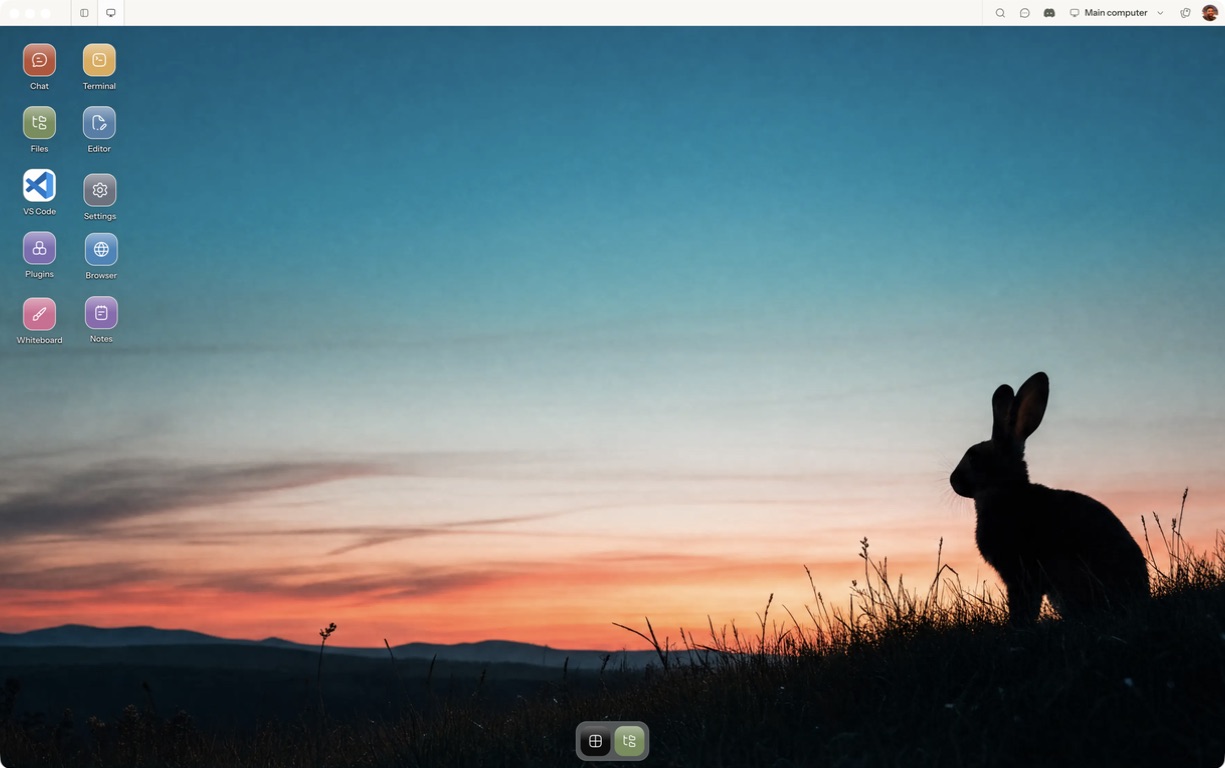
- Follow the quickstart to sign in, choose a computer and complete any required provisioning. To use the native app, follow the desktop installation and approval steps.
- Open a separate session with a small sample project or synthetic input. Configure the agent access needed for that task and make the expected output explicit.
- Record setup steps, test results and learner prerequisites before planning a cohort.
Start with this small prototype, then discuss a scoped pilot for organizational access, integrations or governance. A workflow example does not imply that every proposed team capability is available in the product today.
Open Matrix →Read the quickstart →Current plans and pricing →