Matrix OS vs ChatGPT Projects: memory in a chat or a computer that acts?
Compare Matrix OS and ChatGPT Projects for project memory, files, collaboration, tools, execution, persistence, and recurring work.
ChatGPT Projects is the better choice when you want chats, uploaded files, project instructions, memory, and ChatGPT tools organized around a long-running topic. Matrix OS is the better fit when the project needs its own persistent computer with a filesystem, terminals, running services, installed agents, and operational artifacts.
The distinction is not memory versus no memory. It is conversational project context versus a durable execution environment.
These comparisons use the same criteria and acknowledge where each alternative is stronger. Verify current plan limits and features before deciding.
At a glance
| Criterion | ChatGPT Projects | Matrix OS |
|---|---|---|
| Primary surface | ChatGPT project | Cloud desktop, files, terminals, apps, CLI |
| Context | Chats, uploads, instructions, project memory | Files, workspace records, repos, sessions, transcripts |
| Tools | ChatGPT tools and enabled apps | Installed Linux tools, coding agents, Matrix integrations |
| Execution | Tasks supported inside ChatGPT | General processes and services on the Matrix computer |
| Collaboration | Shared projects and contained project context | Shared or reattachable workspace/session patterns; validate team controls for the intended deployment |
| Best fit | Research, writing, planning, and chat-centered recurring work | Work needing a persistent machine and inspectable execution |
Where ChatGPT Projects is stronger
Projects gives ChatGPT users a familiar way to group conversations, upload files, add instructions, retain project memory, and share context. OpenAI positions it for repeated work such as research, planning, reporting, and content creation. See the official ChatGPT Projects guide.
For teams already working in ChatGPT, this is a low-friction way to keep a body of conversational work coherent. Business, Enterprise, and Edu controls apply to projects according to workspace settings.
Choose ChatGPT Projects when the principal artifact is a set of conversations and generated documents.
Where Matrix OS is different
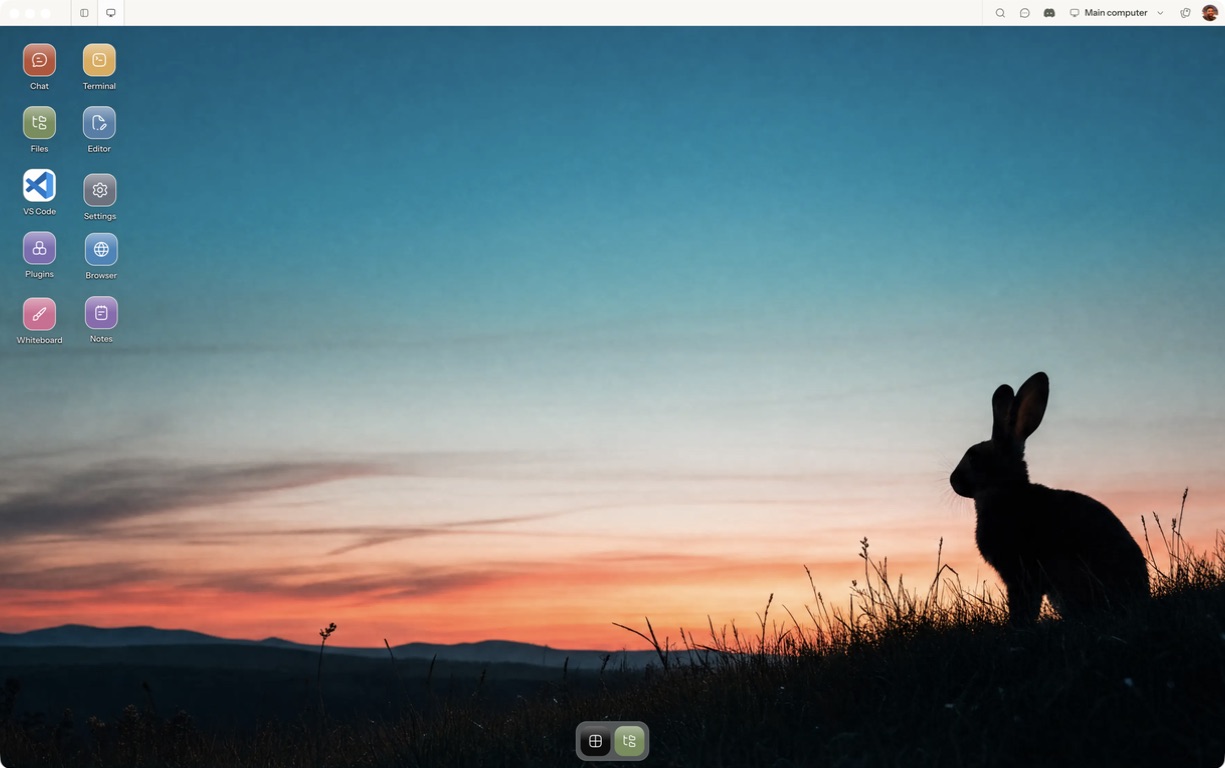
Matrix provides a computer. Project context can include actual repositories, shell processes, previews, files, and persistent sessions. The agent can operate inside the same environment a developer or operator later inspects.
This is useful when work must continue after a chat closes, when tools need installation, or when the output is a running service rather than only an answer or file.
Compare the work itself
Research and drafting
ChatGPT Projects offers a polished, direct workflow for files, web research, Canvas, memory, and conversation. Matrix can support research and documents, but its advantage is not a superior chat-project organizer.
Coding and processes
Matrix exposes a Linux environment, Git, terminals, and installed coding agents. ChatGPT may provide coding and agent tools depending on the plan, but a Project remains a ChatGPT context container rather than a user-operated persistent machine.
Memory
ChatGPT Project memory can reference project conversations and files under documented plan and workspace rules. Matrix retains files and workspace artifacts on the cloud computer. These are different memory models: inferred conversational context versus inspectable filesystem and application state.
Connected actions
Both can interact with external services through their respective apps or integrations. Test the exact service, action, approval, identity, and retention behavior required.
Which should you choose?
Choose ChatGPT Projects if:
- your work is primarily research, analysis, writing, or planning,
- ChatGPT is already the team's main AI surface,
- shared chats and files provide enough continuity,
- you do not need to operate a general cloud machine.
Choose Matrix OS if:
- work needs a filesystem and long-running processes,
- you want to bring multiple agent tools into one computer,
- repositories, terminals, previews, and apps are core artifacts,
- the environment must remain available independently of the chat surface.
Test one recurring workflow
Run a weekly research-to-action loop in both products. Gather sources, create a brief, update a working artifact, execute one bounded task, return after several days, and hand the context to a teammate. Compare continuity, evidence, actionability, permissions, and recovery.
The right choice depends on whether your project needs better conversation memory or somewhere for the work itself to live.
Explore Matrix's professional assistant or read why agents need a computer.
Try a first task in Matrix
Compare drafting from shared context with a task that also executes code and saves files.
- Follow the quickstart to sign in, choose a computer and complete any required provisioning. To use the native app, follow the desktop installation and approval steps.
- Open a separate session with a small sample project or synthetic input. Configure the agent access needed for that task and make the expected output explicit.
- Choose based on the required output and tools, not a generic product ranking.
For a worked coding example, use the setup and reconnect walkthrough. Inspect the result before expanding the scope or leaving a longer task unattended.
Open Matrix →Read the quickstart →Current plans and pricing →