Best cloud development environments for AI coding agents
A practical framework for comparing persistent computers, cloud IDEs, task sandboxes, Codespaces, Coder, Daytona, VPS setups, and Matrix OS.
The best cloud development environment for an AI coding agent depends on the job. Use a task sandbox for isolated delegation, a cloud IDE for repository-centered interactive development, a raw VPS for infrastructure control, or a persistent agent computer when multiple CLIs, services, files, and review workflows must stay available across devices.
Which type of cloud environment do you need?
| Type | Examples to evaluate | Best for | Main tradeoff |
|---|---|---|---|
| Agent task cloud | Claude Code web, Codex cloud | Delegated repository tasks | Less like a continuously owned computer |
| Cloud IDE/dev environment | GitHub Codespaces, Coder, Daytona | Reproducible developer environments | Lifecycle varies by platform and policy |
| Raw VPS | Major cloud/VPS providers | Full control | You operate everything |
| Persistent agent computer | Matrix OS | Long-running multi-agent workspace | Ongoing compute and product commitment |
This table is a category map, not a universal ranking. Test current features, security controls, regions, prices, and lifecycle behavior directly.
What should you test before choosing?
Does the process keep running?
Does the agent continue when the client disconnects? What happens after inactivity, a reboot, platform maintenance, or a spending limit? Do not confuse preserved files with a process that is still executing.
Can it run the real development stack?
Can the agent run the real package manager, test suite, database, browser automation, containers, and preview server? A capable model cannot compensate for a toy runtime.
Can each agent be isolated?
Can every concurrent agent receive its own worktree, branch, ports, database, and credentials? How is network and secret access restricted?
Can a human review the actual work?
Can a person inspect live logs, diffs, test results, previews, and approval requests without reconstructing context from chat?
How do people and tools authenticate?
How do browser, CLI, mobile, Git provider, and team access work? Look for supported device flows and scoped credentials instead of copied tokens.
Who operates the environment?
Who patches the host, secures the edge, manages backups, handles incidents, and restores state? “Flexible” often means “you own it.”
What does real usage cost?
Model active compute, storage, idle time, parallel workers, data transfer, and operator time. A per-hour environment and an always-on monthly computer solve different utilization patterns.
Where each environment type works well
Task clouds minimize setup for delegated work. They are a good default when a clean repository task can run in a provider-managed environment.
Codespaces and cloud development platforms emphasize reproducible environments and interactive development. Evaluate idle policies and whether background processes remain alive for the required duration.
Coder and Daytona-style platforms are worth evaluating when teams want programmatic or self-hosted development-environment infrastructure. Compare deployment model, templates, orchestration, lifecycle, and operator burden using current first-party documentation.
A raw VPS is the most composable option. It also makes you responsible for every missing layer between a server and a safe developer product.
Matrix OS is built around a dedicated computer for agents and people: persistent terminals, repositories, files, apps, previews, browser and CLI access, and orchestration through Symphony. It supports a managed cloud path and a self-host path.
Run the same task in every shortlisted environment
Run the same bounded repository task in each shortlisted environment. Record:
- setup time,
- time to first passing test,
- behavior after closing the client,
- behavior after the idle window,
- reconnection quality,
- diff and preview review flow,
- secret exposure surface,
- total compute and operator cost.
One useful test is a dependency upgrade that runs unit tests, starts a preview, and opens a draft PR. Close the client halfway through. Record whether the process continues, how you reconnect, and what evidence is waiting for review. That tells you more than a feature checklist.
Common questions about cloud environments for coding agents
Is a cloud IDE enough for autonomous agents?
Sometimes. Verify process lifetime, unattended permissions, resource limits, secrets, parallel isolation, and review artifacts. Interactive editor quality alone does not answer those questions.
Is a VPS the cheapest option?
It may have the lowest compute line item. Include engineering time for setup, security, access, backups, updates, monitoring, and recovery.
What is the best environment for multiple agents?
One that supplies isolated workspaces and runtime resources, persistent execution, constrained credentials, observable logs and diffs, and a human-controlled integration queue.
Try a first task in Matrix
Run the same bounded repository task in Matrix and your existing environment.
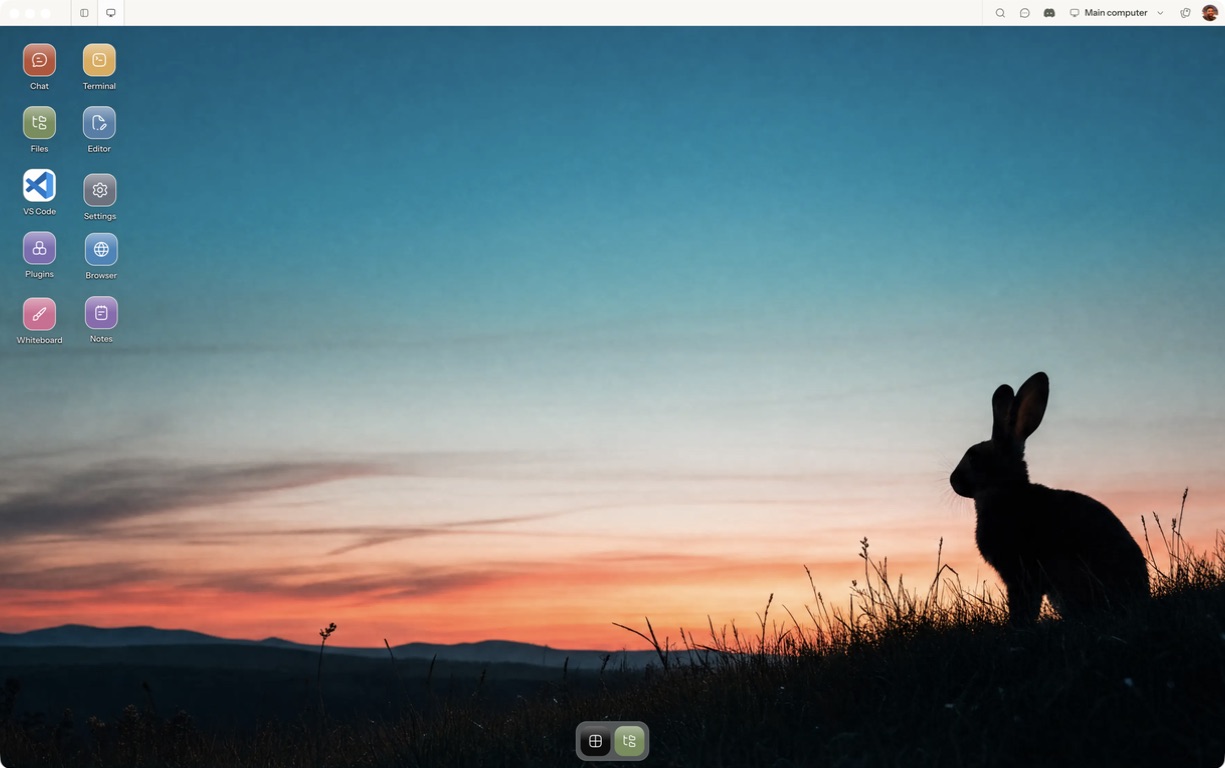
- Follow the quickstart to sign in, choose a computer and complete any required provisioning. To use the native app, follow the desktop installation and approval steps.
- Open a separate session with a small sample project or synthetic input. Configure the agent access needed for that task and make the expected output explicit.
- Record setup time, test results, recovery behavior and total cost under comparable settings.
For a worked coding example, use the setup and reconnect walkthrough. Inspect the result before expanding the scope or leaving a longer task unattended.
Open Matrix →Read the quickstart →Current plans and pricing →