OpenHands Cloud vs self-hosted vs Matrix OS
Compare OpenHands Cloud, self-hosted OpenHands, and Matrix OS by agent layer, runtime ownership, isolation, persistence, and operational responsibility.
OpenHands Cloud, self-hosted OpenHands, and Matrix OS solve different layers of the coding-agent stack. OpenHands is an agent platform with hosted and self-hosted deployment paths. Matrix OS is a retained computer and workspace where terminal agents and development services run. The right choice depends on whether you are selecting the agent, the runtime, or both.
That distinction corrects an outdated comparison: OpenHands does provide managed infrastructure through OpenHands Cloud. Its documentation also supports local, CLI, headless, remote-runtime, and enterprise deployment patterns. Review the current OpenHands options.
What does OpenHands provide?
OpenHands supplies the software-development agent experience: task execution, tool use, model configuration, repository workflows, and sandbox runtimes. The local setup uses a containerized runtime by default, while OpenHands Cloud supplies managed sandbox environments.
OpenHands Enterprise adds a self-hosted or private-cloud path with organizational controls. That means “OpenHands” is not one hosting model. Buyers should evaluate Cloud, open-source local deployment, and Enterprise separately. See the deployment matrix.
What does Matrix OS provide?
Matrix OS starts from the computer rather than a single agent framework. It provides a retained cloud machine with repositories, terminals, files, preview services, browser access, and Matrix's orchestration surfaces. Teams can use terminal agents such as Claude Code, Codex, Gemini CLI, and OpenCode in that environment.
Matrix and OpenHands are therefore not strict substitutes. A technically capable operator may install OpenHands on a compatible Matrix computer, but that should be evaluated as a self-managed application deployment—not presented as a built-in Matrix integration.
Compare the operating models
| Question | OpenHands Cloud | Self-hosted OpenHands | Matrix OS |
|---|---|---|---|
| Primary purchase | Managed coding-agent product | Agent platform you operate | Retained agent computer and workspace |
| Agent choice | OpenHands with supported models | OpenHands with configured models | Multiple terminal-agent tools |
| Runtime | Managed sandbox | Docker/local/enterprise configuration | Dedicated Matrix computer |
| Operations | OpenHands manages service infrastructure | Your team manages deployment | Matrix manages hosted computer layer |
| Best fit | Fast OpenHands adoption | Customization and private deployment | Durable multi-tool development environment |
None wins every row. OpenHands Cloud is the shortest route if the team specifically wants the OpenHands agent. Self-hosting is strongest when deployment control and customization justify operational work. Matrix fits when the persistent environment and freedom to use several terminal agents are the primary requirements.
Where persistence actually lives
“Persistent” can refer to different things:
- conversation history;
- files inside a runtime;
- a resumable sandbox;
- a retained development machine;
- a process that restarts after host failure.
Do not collapse these into one checkbox. OpenHands documents conversation resume and several runtime choices. Matrix retains the project computer across client disconnections. Neither removes the need for Git checkpoints, backups, and process supervision when recovery matters.
Security and isolation questions
Before choosing, ask:
- Where do repository data and generated artifacts live?
- Which party owns model credentials?
- Is isolation per task, user, team, or machine?
- Can runtimes reach private services safely?
- Who patches the host and runtime images?
- What survives termination, restart, or account closure?
OpenHands warns that its open-source single-user setup is not a ready-made multi-tenant deployment; Enterprise exists for broader organizational requirements. Matrix users should likewise treat a dedicated computer as a security boundary that still requires scoped credentials and review gates.
Which option should you choose?
Choose OpenHands Cloud when you want OpenHands with minimal installation and its managed repository workflow.
Choose self-hosted OpenHands when you want to customize the agent stack and are prepared to operate its application, containers, authentication, networking, and upgrades.
Choose Matrix OS when you want a retained development computer that supports several terminal-agent workflows, persistent project services, and direct browser or shell access.
If you need both, test OpenHands on a compatible retained host against a representative repository. Validate installation, resource use, sandbox security, preview routing, and recovery before calling the combination production-ready.
For adjacent decisions, see Codex alternatives in 2026, Matrix OS vs a VPS, and E2B alternatives for persistent workloads.
Frequently asked questions
Does OpenHands provide cloud compute?
Yes. OpenHands Cloud uses managed sandbox environments. OpenHands also documents local, remote-runtime, and enterprise self-hosted options.
Is Matrix OS an OpenHands replacement?
Not directly. OpenHands is primarily an agent platform; Matrix is primarily a retained computer and workspace for agents. The overlap is in where and how agent work executes.
Can OpenHands run on Matrix OS?
A Matrix computer is a general Linux environment, so installation may be possible when current OpenHands requirements are satisfied. Treat this as a self-managed deployment and validate it; it is not currently documented as a first-class Matrix integration.
Which option offers the most control?
Self-hosted OpenHands offers the most control over the OpenHands application stack. Matrix offers direct control over a retained project environment while managing more of the surrounding platform. OpenHands Cloud minimizes setup but delegates more infrastructure decisions to its vendor.
Try a first task in Matrix
Try the same sample task and list the runtime controls you actually use.
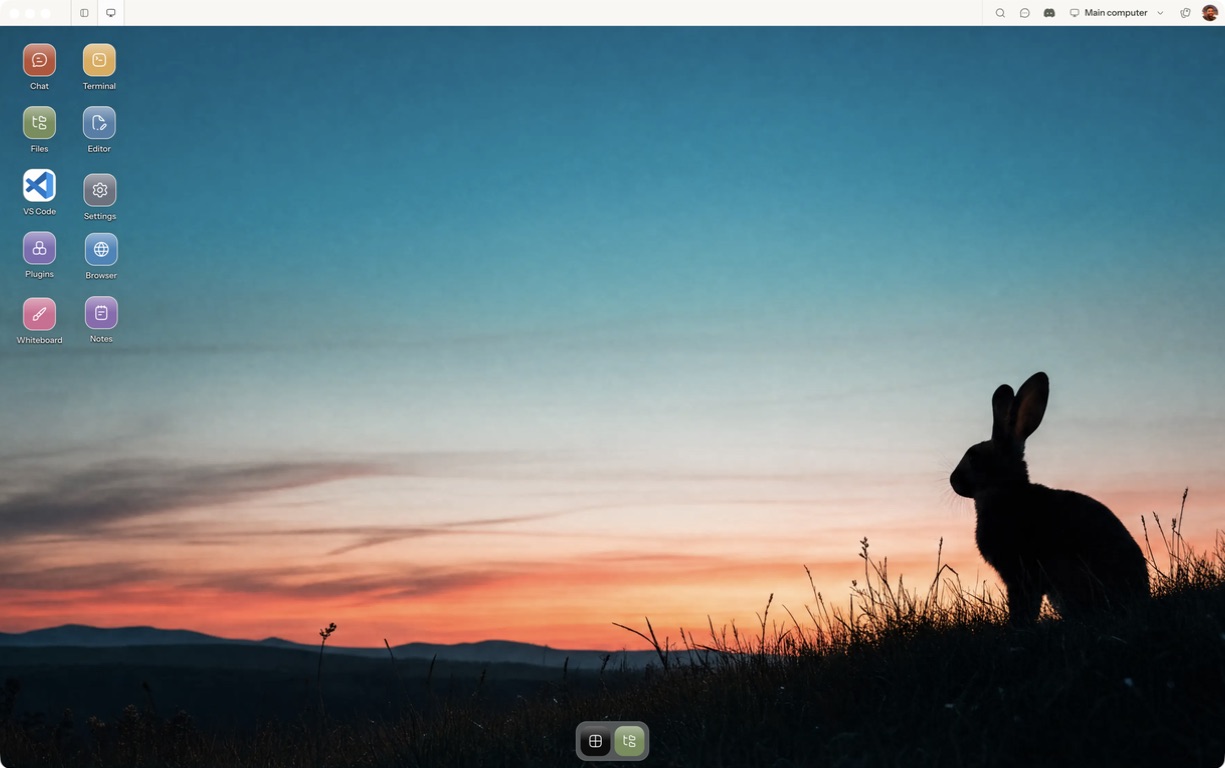
- Follow the quickstart to sign in, choose a computer and complete any required provisioning. To use the native app, follow the desktop installation and approval steps.
- Open a separate session with a small sample project or synthetic input. Configure the agent access needed for that task and make the expected output explicit.
- Compare managed-agent convenience with the responsibility of operating your own environment.
For a worked coding example, use the setup and reconnect walkthrough. Inspect the result before expanding the scope or leaving a longer task unattended.
Open Matrix →Read the quickstart →Current plans and pricing →