Matrix OS vs Replit Agent: app builder or always-on workspace?
Compare Matrix OS and Replit Agent for building apps, controlling the environment, running other agents, persistent development work, deployment, and team workflows.
Replit Agent is the more direct choice when you want to describe an application and move quickly from prompt to working preview and deployment inside one product. Matrix OS is the better fit when you want an always-on Linux computer where you choose the repositories, tools, coding agents, terminals, and services.
The practical distinction is guided app creation versus environment ownership.
These comparisons use consistent criteria and neutral recommendations. Verify current features and prices with each provider.
At a glance
| Criterion | Replit Agent | Matrix OS |
|---|---|---|
| Primary job | Build and publish an app from a prompt | Host a persistent computer for agents and development |
| Workflow | Guided planning, generation, preview, checkpoints, publishing | User-directed shell, repos, agents, previews, and PRs |
| Environment | Replit project environment | Private hosted Linux computer |
| Agent choice | Replit Agent | Bring Claude, Codex, OpenCode, Gemini CLI, and other tools |
| Deployment | Integrated Replit publishing | Run previews and use the deployment workflow you choose |
| Best user | Someone optimizing for a fast app-building loop | Developer or team optimizing for a durable, flexible workspace |
Where Replit Agent is stronger
Replit provides a coherent path from idea to application. Its official guide emphasizes describing the product, reviewing a plan, letting Agent write and debug code, testing in Preview, using checkpoints, and publishing from the same project. See Replit's Agent guide.
That guided experience is valuable for founders, operators, students, and developers who want a fast first result without assembling a toolchain.
Choose Replit when integrated creation and publishing are more important than selecting every part of the environment.
Where Matrix OS is different
Matrix begins with the computer. You can clone an existing repository, install system packages, authenticate your chosen coding agents, keep named sessions alive, and expose previews through the Matrix workflow.
The Matrix cloud-coding guide documents the workspace as owned files and records under the user's Matrix home. The platform does not require one model or one agent interface.
Choose Matrix when the project already has an engineering workflow, when several agents must share the same tools, or when work extends beyond generating one app.
Important tradeoffs
Speed to first application
Replit's guided workflow usually has the clearer advantage. It is explicitly designed to turn a description into a preview and publishable application.
Toolchain freedom
Matrix provides a general Linux environment with package installation and terminal access. That flexibility is useful, but it asks the user to understand and operate more of the stack.
Existing repositories
Both can work with code projects, but test the exact import, branching, and organization flow you need. Matrix centers Git and terminal workflows; Replit centers the Replit project experience.
Deployment
Replit integrates publishing into the builder. Matrix can keep a preview or service running, but production deployment remains a separate workflow chosen by the team.
Non-coding work
Matrix can host files, apps, assistants, and connected-tool workflows on the same computer. Those use cases are broader, but each required integration should be confirmed against current documentation.
Which should you choose?
Choose Replit Agent if:
- you want the shortest guided path from idea to hosted app,
- one integrated builder and deployment flow is desirable,
- visual preview and conversational iteration are the core workflow,
- managing a general-purpose machine would add unnecessary complexity.
Choose Matrix OS if:
- you want a persistent general-purpose cloud computer,
- the team brings its own repositories and agent tools,
- multiple long-running terminals and services matter,
- the development environment must support work beyond one app builder.
Test with the same project
Ask each platform to import or create a small full-stack app, add one feature, run tests, recover from a broken change, expose a preview, and document how the work reaches production. Compare time, control, review evidence, portability, and ongoing operational effort.
The right choice is the workflow your team can reliably own after the first impressive demo.
Explore the Matrix cloud workspace or start with the developer quickstart.
Try a first task in Matrix
Use a small sample app to compare development and ongoing runtime needs.
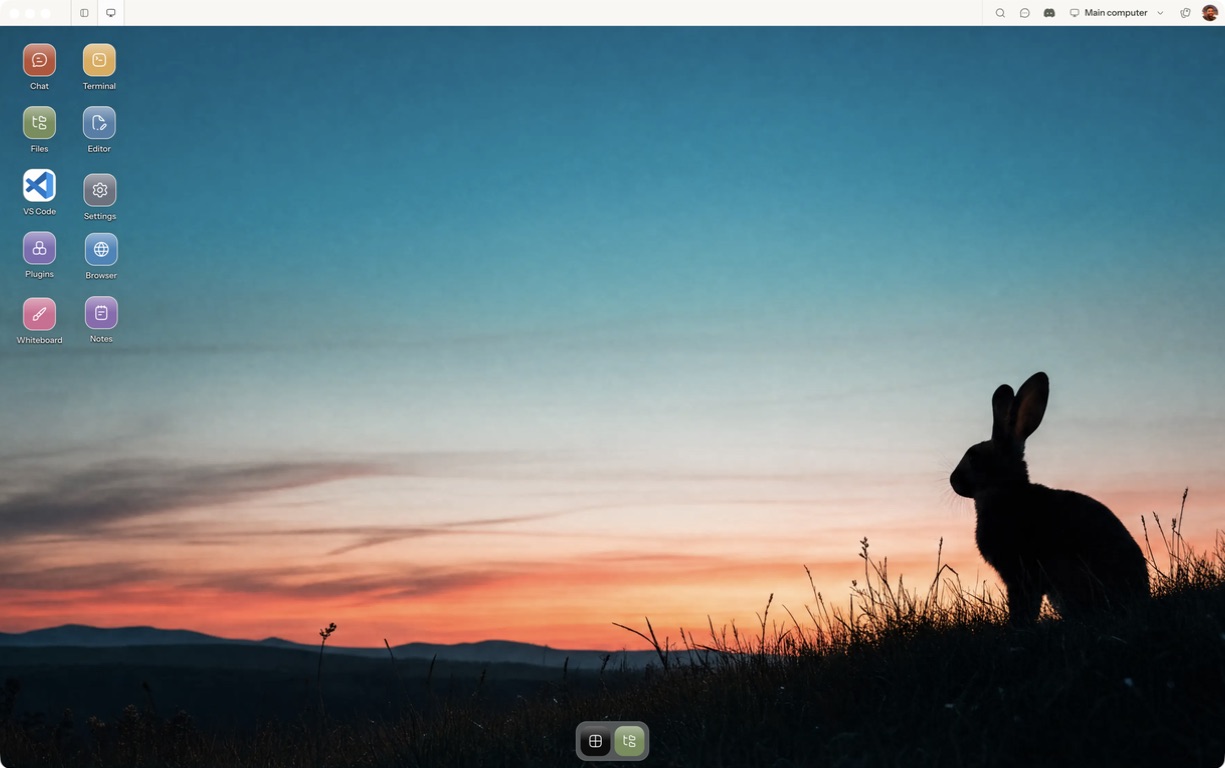
- Follow the quickstart to sign in, choose a computer and complete any required provisioning. To use the native app, follow the desktop installation and approval steps.
- Open a separate session with a small sample project or synthetic input. Configure the agent access needed for that task and make the expected output explicit.
- Review code, tests, deployment choices and lifecycle behavior in each product.
For a worked coding example, use the setup and reconnect walkthrough. Inspect the result before expanding the scope or leaving a longer task unattended.
Open Matrix →Read the quickstart →Current plans and pricing →