Matrix OS vs n8n: automation graph or agent runtime?
Compare Matrix OS and n8n across deterministic workflows, visual orchestration, AI agents, integrations, execution environments, state, approvals, and operational fit.
n8n is the better choice when you want to design, inspect, and operate trigger-and-node workflows across APIs. Matrix OS is the better fit when an agent needs a persistent general-purpose computer with files, terminals, applications, and open-ended tools.
Both can participate in agentic workflows. The distinction is a visual automation graph versus an agent operating environment.
These comparisons apply the same criteria and explain when the alternative wins. Confirm current nodes, licenses, hosting, and Matrix integrations before choosing.
At a glance
| Criterion | n8n | Matrix OS |
|---|---|---|
| Core object | Workflow graph with triggers and nodes | Cloud computer with files, apps, and sessions |
| Best work | Repeatable API and data automation | Open-ended tasks needing local tools and durable state |
| Observability | Workflow executions and node-level data | Terminal output, files, session records, and activity |
| Integrations | Large node and credential ecosystem | Smaller documented integration set plus general Linux tools |
| AI | AI and agent nodes inside workflows | Bring agent CLIs and Matrix-native agent workflows |
| Hosting | n8n Cloud or self-hosted | Matrix Cloud or preview self-host path |
Where n8n is stronger
n8n makes process topology explicit. Operators can see triggers, branches, transformations, retries, API calls, and outputs. That is valuable for deterministic or semi-deterministic business automation where each step should be inspectable.
n8n also offers a broad integration ecosystem and can be self-hosted. Choose it when the job is connecting systems through a repeatable graph and an API-oriented workflow is the natural representation.
See n8n's official AI workflow documentation.
Where Matrix is different
Matrix begins with a computer. An agent can inspect a repository, run a script, use a terminal application, create local artifacts, and maintain a service or preview. The path does not have to be fully modeled as nodes before work begins.
This flexibility suits exploratory and tool-rich tasks. It can also make behavior less predictable, which increases the importance of permissions, review, and logs.
Deterministic steps and agent judgment belong together
The strongest architecture may combine them:
- n8n receives a trigger and performs exact data movement,
- a bounded agent interprets an ambiguous input,
- n8n validates required output fields,
- a human approves a consequential action,
- the workflow writes the result and records status.
Do not replace a reliable API node with an agent simply because natural language is fashionable. Use agent judgment where rules cannot express the work economically.
Which should you choose?
Choose n8n if:
- workflows are primarily event-driven API integrations,
- visual process inspection matters,
- deterministic branching and transformations dominate,
- its available nodes cover the required systems.
Choose Matrix OS if:
- tasks need a filesystem, shell, browser IDE, or arbitrary tools,
- an agent must work in a persistent project environment,
- the path cannot be fully specified as an automation graph,
- people need to inspect and continue the same workspace.
Use both when n8n is the orchestration layer and Matrix is a controlled execution environment. Define authentication, idempotency, timeout, retry, and approval boundaries explicitly.
Test a real exception
Build the same document or research workflow in both products. Then remove an input, expire a credential, and introduce conflicting data. Compare how each system exposes state, requests intervention, retries safely, and recovers.
Happy-path demos obscure the difference. Exceptions reveal whether the workflow is operable.
Read Matrix's trigger-to-outcome architecture or review the current integration documentation.
Try a first task in Matrix
Separate a sample workflow's deterministic steps from the part that needs agent reasoning.
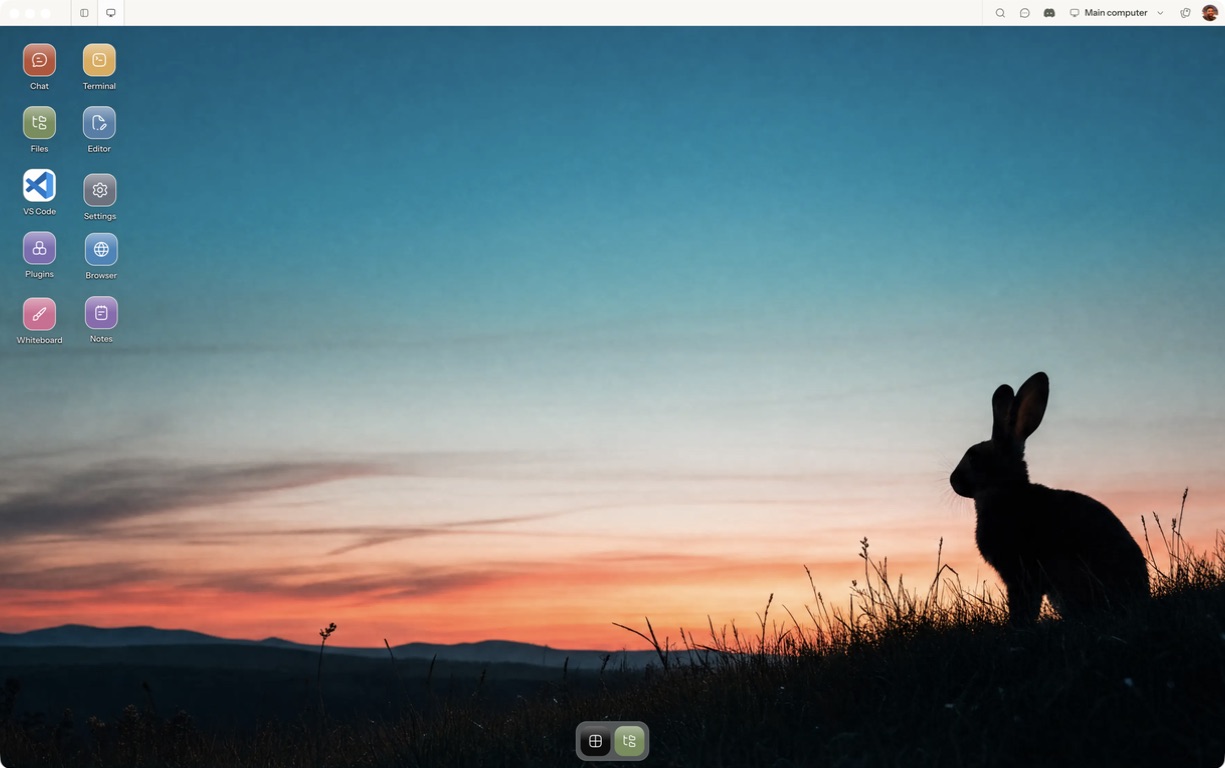
- Follow the quickstart to sign in, choose a computer and complete any required provisioning. To use the native app, follow the desktop installation and approval steps.
- Open a separate session with a small sample project or synthetic input. Configure the agent access needed for that task and make the expected output explicit.
- Inspect retries, state and approvals instead of assuming an agent replaces a workflow engine.
For a worked coding example, use the setup and reconnect walkthrough. Inspect the result before expanding the scope or leaving a longer task unattended.
Open Matrix →Read the quickstart →Current plans and pricing →