Matrix OS vs Lovable, Bolt, and v0: prototype factory or durable system?
Compare Matrix OS with Lovable, Bolt, and v0 across prompt-to-app speed, visual iteration, code ownership, environment control, deployment, and long-running work.
Lovable, Bolt, and v0 are stronger choices when the main job is turning a prompt into a visual web application quickly. Matrix OS is a stronger fit when the main job is maintaining a durable development computer where agents, repositories, terminals, previews, and operational tools continue working together.
This is not one three-way feature ranking. The app builders have different capabilities. The useful comparison is their shared prompt-to-product center of gravity versus Matrix's environment-first model.
This comparison uses consistent criteria and explains when the alternative is better. Confirm current product behavior and pricing directly.
Category map
| Product | Best starting point | Durable object |
|---|---|---|
| Lovable | Describe and visually iterate on a full-stack app | Lovable project, optionally synced to GitHub |
| Bolt | Build or import a web project conversationally | Bolt project and connected repository |
| v0 | Generate and iterate on a web interface or app | v0 chat/project and Vercel deployment |
| Matrix OS | Open a persistent computer and choose your tools | Files, repos, sessions, services, and apps on the computer |
Where the app builders win
They compress the distance between an idea and something visible.
Lovable provides conversational building, visual editing, backend paths, preview, publishing, and GitHub synchronization. Its docs explain that a connected repository becomes the source of truth and can be used with normal Git workflows. See Lovable's GitHub documentation.
Bolt supports creating and importing GitHub projects, including organization-level repository access. See Bolt's GitHub documentation.
v0 generates an application from a prompt and integrates publishing with Vercel. Its deployment documentation covers production URLs, previews, environment variables, protection, and deployment policy. See v0 deployments.
Choose these products when visual product creation is the bottleneck.
Where Matrix is different
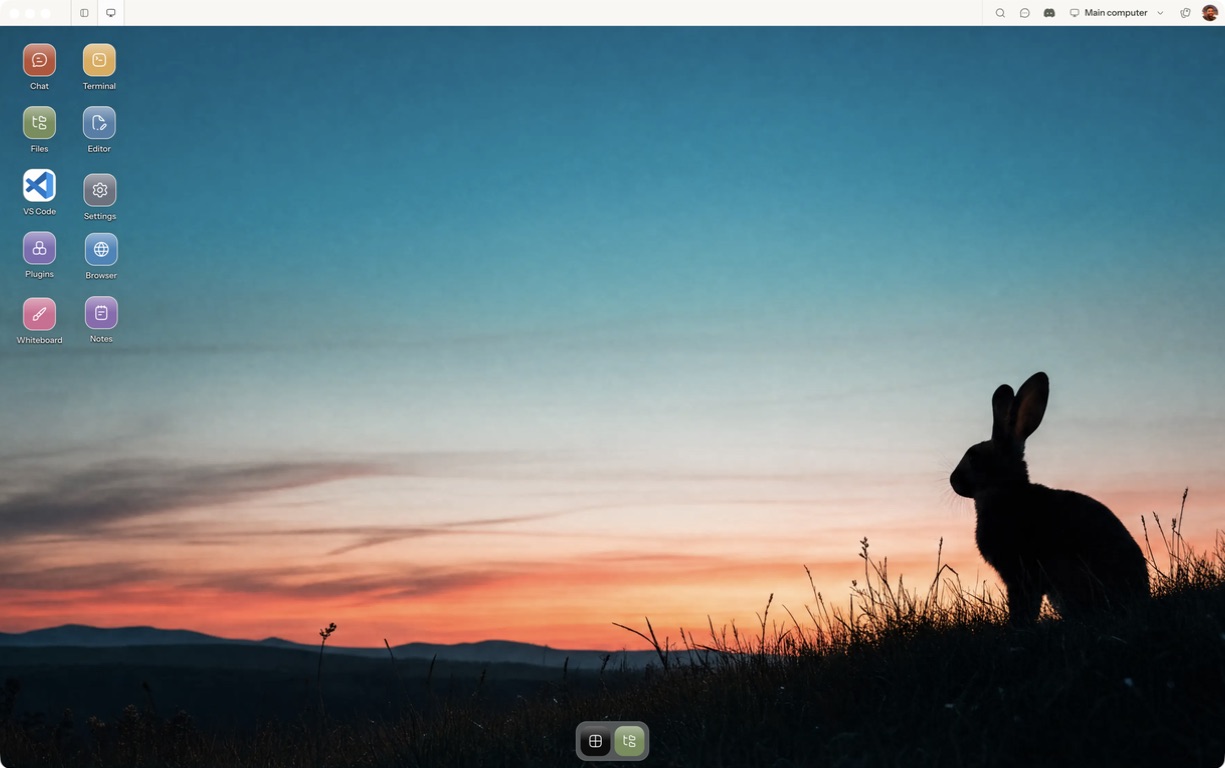
Matrix does not begin with a specialized web-app generator. It provides the Linux computer where a developer can install tools, clone repositories, run Claude or Codex, keep multiple terminal sessions alive, and operate previews and tests.
That makes it suitable for existing systems, mixed toolchains, backend services, scripts, research, and agent workflows that do not fit one app-builder canvas. It also means Matrix does not provide the same opinionated prompt-to-polished-interface shortcut.
Compare the lifecycle, not the first prompt
Prototype speed
Lovable, Bolt, and v0 should usually win for a greenfield visual prototype.
Existing codebase
Test repository import, branch handling, bidirectional sync, organization permissions, and behavior when developers edit code elsewhere. Do not assume all GitHub connections work identically.
Environment control
Matrix exposes a general-purpose Linux workspace. App builders abstract more of the environment to make creation faster.
Deployment
The builders offer integrated publishing paths. Matrix supports persistent previews and services, while production deployment remains part of the user's chosen stack.
Long-running work
Matrix is designed around persistent sessions and files. App builders retain projects, but their primary workflow is iterative product generation rather than hosting arbitrary agent and terminal work.
Team governance
All four products evolve quickly. Enterprise buyers should test identity, repository scope, auditability, data handling, deployment policy, and recovery directly rather than relying on category assumptions.
Which should you choose?
Choose Lovable, Bolt, or v0 if:
- you need a prototype or web app quickly,
- visual iteration is central,
- integrated preview and publishing reduce meaningful friction,
- the supported stack fits the product.
Choose Matrix OS if:
- you need a general computer rather than a specialized builder,
- existing repositories and terminal tools define the workflow,
- multiple coding agents or services must run together,
- the workspace must support code and non-code operational work.
Many teams can use both: an app builder for rapid creation, then GitHub and a durable environment for deeper engineering and operations.
A fair evaluation task
Build the same small internal application. Then add authentication, change the data model, run tests, fix a regression, hand the repository to another developer, and operate it for two weeks. Measure the whole lifecycle—not only time to the first screenshot.
Explore Matrix cloud coding or read how to choose hosting for AI coding agents.
Try a first task in Matrix
Build the smallest representative UI change and inspect its repository and tests.
- Follow the quickstart to sign in, choose a computer and complete any required provisioning. To use the native app, follow the desktop installation and approval steps.
- Open a separate session with a small sample project or synthetic input. Configure the agent access needed for that task and make the expected output explicit.
- Compare iteration speed, code ownership and any services the project needs to keep running.
For a worked coding example, use the setup and reconnect walkthrough. Inspect the result before expanding the scope or leaving a longer task unattended.
Open Matrix →Read the quickstart →Current plans and pricing →