Matrix OS vs HubSpot AI: CRM copilot or agent-native sales system?
Compare Matrix OS and HubSpot Breeze across CRM context, sales and marketing agents, connected tools, deal workspaces, execution, governance, and team fit.
HubSpot AI is the stronger choice when customer data, pipeline, campaigns, service, and AI work should remain inside an established CRM platform. Matrix OS is the stronger fit when a team wants a flexible agent workspace that can operate across files, tools, terminals, and selected systems without making the CRM the entire working environment.
Matrix does not currently replace HubSpot's mature CRM, marketing, sales, or service products. The comparison is between CRM-native intelligence and a broader agent-computer model.
These comparisons use consistent criteria and identify when the alternative wins. Confirm current HubSpot editions, credits, and Matrix actions directly.
At a glance
| Criterion | HubSpot Breeze | Matrix OS |
|---|---|---|
| System center | HubSpot customer platform and Smart CRM | Persistent cloud computer and workspace |
| Context | CRM records, customer activity, content, connected HubSpot data | Selected files, apps, repositories, and connected tools |
| Agents | Breeze assistants and agents within HubSpot workflows | User-selected agents and Matrix-native workflows |
| GTM suite | Mature marketing, sales, service, and operations products | Product blueprints for deal and company workflows; not a full GTM suite |
| Best fit | Teams committed to HubSpot as customer system | Cross-tool work needing a general execution environment |
Where HubSpot is stronger
HubSpot already owns the structured customer record and the workflows around it. Breeze can summarize CRM records, create content, answer questions, and support agents for customer conversations and specialized GTM work. See HubSpot's Breeze overview.
Its Customer Agent is designed to answer from approved content, cite sources, work across supported customer channels, and hand complex cases to people. See the HubSpot product page.
Choose HubSpot when the CRM is the natural source of truth and the desired workflow fits its platform.
Where Matrix is different
Matrix can provide a working environment around a deal or company process: files, drafts, research, terminal tools, agent sessions, and selected integrations. The CRM can remain authoritative while Matrix holds working artifacts that do not fit naturally into CRM fields.
The agent-native CRM and deal-workspace articles are product blueprints, not claims that Matrix currently offers HubSpot-equivalent CRM functionality.
CRM record versus deal workspace
A CRM excels at standardized lifecycle data: contacts, companies, activities, owners, stages, and reporting. A deal workspace can be better for messy active work: research, proposals, files, decisions, technical investigations, and cross-functional handoffs.
Most teams need both functions. The architectural question is whether to keep all work inside the CRM, extend it with connected tools, or use a separate execution workspace around selected records.
Which should you choose?
Choose HubSpot AI if:
- HubSpot is already the customer system of record,
- sales, marketing, and service workflows should be administered together,
- CRM-native reporting and governance matter,
- Breeze's supported agents cover the jobs.
Choose Matrix OS if:
- work crosses code, files, documents, and tools beyond CRM,
- agents need a persistent computer,
- the team wants to choose different agent runtimes,
- a bounded pilot should remain separate from the production CRM.
Use both if HubSpot remains authoritative and Matrix receives only the context required for a defined workflow. Write back approved results, preserve record IDs, and avoid shadow CRM state.
Test one sales loop
Choose account preparation and follow-up. Compare data access, source citations, draft quality, approval flow, write-back reliability, visibility, and cost. Include a duplicate contact and contradictory meeting note to test how each product handles bad data.
Read the agentic sales workflow or review Matrix integrations.
Try a first task in Matrix
Use fictional account notes to prepare a proposed update and follow-up draft.
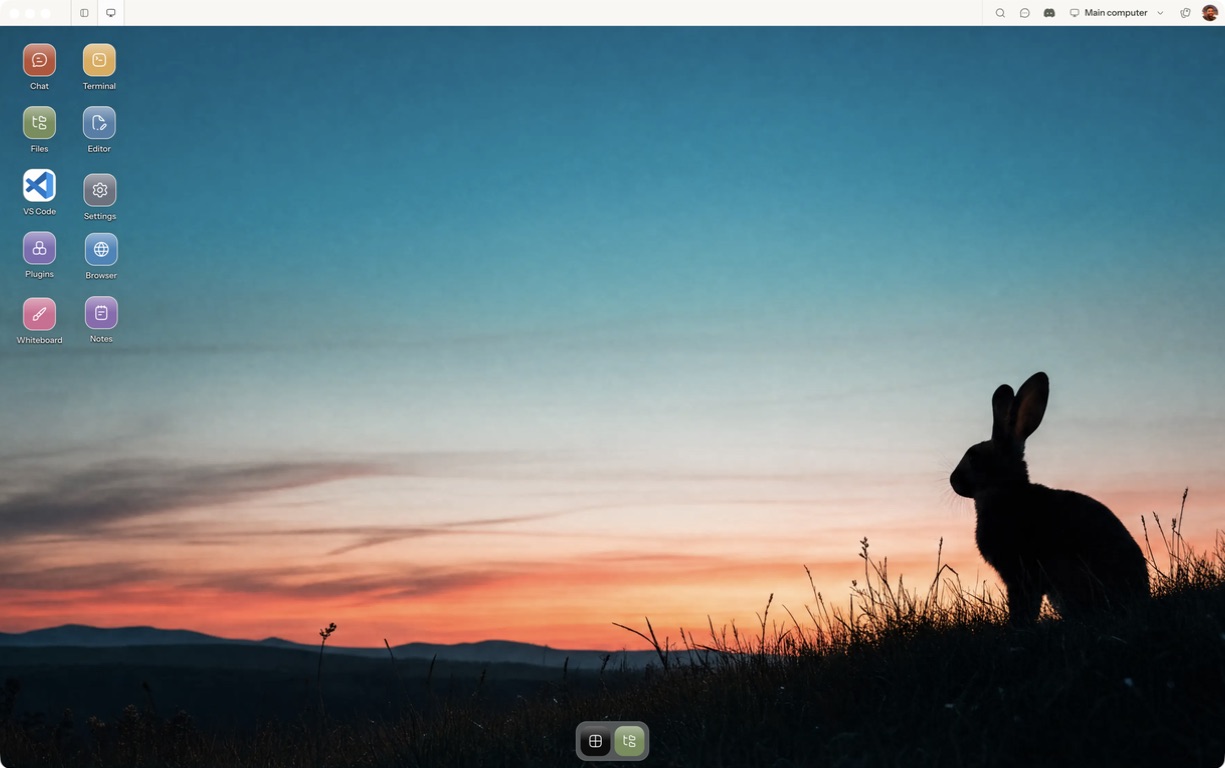
- Follow the quickstart to sign in, choose a computer and complete any required provisioning. To use the native app, follow the desktop installation and approval steps.
- Open a separate session with a small sample project or synthetic input. Configure the agent access needed for that task and make the expected output explicit.
- Keep the CRM as the system of record and review changes before applying them.
For a worked coding example, use the setup and reconnect walkthrough. Inspect the result before expanding the scope or leaving a longer task unattended.
Open Matrix →Read the quickstart →Current plans and pricing →