Grok Bot vs Muse vs Matrix OS: Pricing & Features
Compare Grok Bot, Meta Muse, and Matrix OS on pricing, connected tools, recipes, app building, and the workflows each platform supports.
Disclosure: This comparison is published by Matrix OS. It is based on product documentation and the supplied Meta API pricing text, reviewed September 15, 2026; it is not a hands-on benchmark.
Choosing an AI platform means deciding how you want to bring together your tasks, tools, and context. You might want AI teammates to handle assignments, a personal assistant to coordinate everyday life, or a workspace where you can navigate information, work with agents, and build apps around your needs.
Grok Bot is worth evaluating for delegated business workflows; Meta Muse for everyday personal assistance; and Matrix OS for people who want one workspace for context, connected tools, AI agents, reusable recipes, and custom apps. These recommendations reflect documented product focus, rather than measured performance rankings. Grok Bot overview, Muse introduction, Matrix documentation.
Grok Bot vs Muse vs Matrix OS at a glance
| Comparison | Grok Bot | Meta Muse | Matrix OS |
|---|---|---|---|
| Main focus | AI teammates for delegated work | Personal tasks and long-term goals | Workspace for context, agents, recipes, and apps |
| Environment | Cloud computer with browser, files, and terminal | Dedicated virtual machine with browser | Navigable workspace with files, agents, plugins, and apps |
| Typical interaction | Message individual Bots | Muse app or WhatsApp | Web and desktop workspace; iOS upcoming |
| Background work | Supported, subject to usage limits | Continues after the app closes | Always-on on Builder and Max; Starter sleeps |
| Most relevant evaluation | Multi-step business workflows | Everyday assistance | Research, reports, connected workflows, and app building |
Sources: Grok Bot, Meta Muse, Matrix documentation, Matrix plans.
Grok Bot: delegating work to AI teammates
Grok Bot lets users create Bots with distinct jobs and retained context. Bots can coordinate, work with connected services, and use websites. Documented examples include sales outreach, marketing, operations, and bug fixes. Grok Bot introduction.
It is a useful candidate when your starting point is a defined assignment: research these accounts, prepare follow-up drafts, or investigate this issue.
Test whether a Bot completes the workflow in your existing tools. Browser access does not guarantee every website or authentication step will work without help; the documentation describes human handoffs for blocked or sensitive steps. Grok Bot overview.
Muse: assistance organized around personal goals
Meta positions Muse around personal tasks such as travel, email, shopping, and longer-term plans. Its announcement describes a US rollout, free access for much everyday use, and subscriptions for greater usage. Muse announcement.
Start an evaluation with a recurring personal task and measure how much coordination it removes.
Meta says a separate Sentinel system checks outbound actions, while sensitive steps can require approval. Its planned Confidential VM is a future feature rather than a launch capability. Muse announcement.
Matrix OS: one workspace for context, agents, and apps
Matrix OS brings the material you work with, the tools you connect, and the agents doing the work into a navigable workspace. You can move between conversations, files, projects, and apps as a task develops. Its cloud infrastructure supports that experience; the product’s value comes from what you can organize, create, and do there. Matrix architecture.
Start with a recipe
Recipes provide reusable task briefs for jobs such as market research, weekly reports, campaign briefs, meeting follow-ups, and spend reviews. They specify the inputs, expected result, and review steps, giving you a practical starting point for a task.
Today, you copy a recipe into your agent and provide the relevant context. One-click installation is planned; scheduling is configured separately. Matrix recipes.
Connect tools through plugins and integrations
Plugins extend the tools available in your workspace. Connected services let agents work with relevant information and take supported actions. Matrix documents connections including Gmail, Google Calendar, Google Drive, Slack, and GitHub. What an agent can do depends on the service, connection, and permissions. Matrix integrations.
For an evaluation, connect the tools used in one workflow and check whether the agent can find the right source material, prepare a useful result, and give you enough context to review it.
Build apps around the way you work
Describe the tool you need and ask Matrix to build it, then review and refine the result. Documented examples include lightweight CRMs, project dashboards, personal trackers, content calendars, and learning tools. Apps can include forms, tables, charts, and saved data. Matrix apps.
For example, a marketing workflow could begin with a campaign-brief recipe, use source documents from a connected tool, and lead to a custom campaign tracker. This is an illustrative evaluation scenario, not a measured result.
Use the workspace across devices
Matrix is available through its web workspace and desktop app. An iOS experience is planned. This comparison does not count it as a currently available feature. Matrix platform availability.
The reason to evaluate Matrix is the combination: reusable starting points, connected tools, accessible project context, agents, and software you can shape around your work.
Pricing: compare the cost of your actual workflow
| Product or plan | Published monthly price | Qualification |
|---|---|---|
| Grok Bot through Cursor Pro | $20 | Includes weekly Bot usage |
| Grok Bot through SuperGrok | $30 | Includes Bot access; usage terms apply |
| Meta Muse | Free access available | Exact paid subscription prices not verified |
| Matrix OS Starter | $20 | One agent/task; sleeps when inactive |
| Matrix OS Builder | $100 | Always running; three parallel agents |
| Matrix OS Max | $200 | Advertises six to eight parallel agents |
Sources: Grok Bot pricing, SuperGrok pricing, Muse announcement, Matrix pricing.
These prices cover different combinations of access, compute, and usage. Record subscriptions, model charges, infrastructure, and human review time separately. Grok Bot supports additional usage on eligible accounts. Billing FAQ.
Older Matrix articles list different prices. This comparison uses the current homepage; checkout determines the amount payable. Older trial article, Checkout guidance.
Muse Spark API pricing and rate limits
The Meta Model API uses pay-as-you-go billing with no minimum commitment. These developer rates are separate from Muse personal-agent app subscriptions and should not be compared directly with a monthly workspace plan.
Standard tier — per 1 million tokens: $0.15 cached input, $1.25 uncached input, and $4.25 output. Applies to muse-spark-1.3, muse-spark-1.2, and muse-spark-1.1. Prompts and completions are not used to train Meta models.
Contributor tier — per 1 million tokens: $0.002 cached input, $0.10 uncached input, and $0.20 output. Applies to muse-spark-1.3-contributor and muse-spark-1.2-contributor. The discount requires permission to use prompts and completions to train future Meta models.
Other charges: text-model web search costs $2.50 per 1,000 queries, in addition to token charges. Muse Image costs $0.01 per successfully returned image, including its built-in search. Muse Voice Transcribe costs $0.18 per audio hour. Text pricing has no long-context premium.
Example: 1 million uncached input tokens plus 1 million output tokens costs $5.50 on Standard or $0.30 on Contributor, before search or other charges. This is a usage calculation, not a task-performance benchmark.
Team-wide limits: Standard allows 3,000 requests and 4 million tokens per minute; Contributor allows 100 requests and 3 million tokens per minute. Muse Image allows 150 requests per minute. New background responses have an additional default cap of 600 submissions per minute; normal request and token limits still apply. Transcription has separate limits of 128 concurrent streams and 16,000 stream starts per hour.
Source: Meta pricing and rate limits (pricing text supplied for this comparison; direct access requires login).
Eight metrics for evaluating agents and AI workspaces
We have not run a controlled comparison, so this article does not assign performance scores. Use these metrics to evaluate the products yourself.
| Metric | How to measure it | What it tells you |
|---|---|---|
| Task success rate | Accepted completed tasks ÷ attempted tasks × 100 | Whether work meets requirements |
| Human effort | Setup, intervention, review, and correction minutes per task | How much work you save |
| Time to accepted result | Elapsed time from assignment to approved output | Whether work finishes on time |
| Cost per accepted result | Allocated subscription, usage, compute, and labor cost ÷ accepted results | The real cost of useful work |
| Context retrieval accuracy | Correctly identified relevant sources ÷ required sources | Whether the agent uses the right project information |
| Recipe reuse success | Repeat runs meeting the same acceptance criteria ÷ repeat runs | Whether reusable briefs deliver consistent results |
| App usefulness | Required app workflows passing review ÷ workflows tested | Whether a generated app works for its intended job |
| Approval compliance | Correctly paused restricted actions ÷ tested restricted actions | Whether boundaries are followed |
Define acceptance criteria before each test. Use the same inputs and repeat shared workflows several times. Record the plan, date, connected services, and model where configurable.
Separate shared tasks from specialist tasks. A research brief can support a cross-product comparison. Recipe reuse and app building should be assessed where supported, with unsupported capabilities recorded explicitly rather than treated as failed attempts.
Net time saved = manual baseline time − setup time − intervention time − review and correction time.
An agent that finishes quickly but needs extensive cleanup may deliver less value than one that takes longer and produces usable work.
Which should you choose?
- Evaluate Grok Bot for defined assignments across business tools.
- Evaluate Muse for personal assistance and everyday coordination.
- Evaluate Matrix OS when you want to organize context, connect tools through plugins, work with agents, reuse recipes, and build apps in one workspace.
These recommendations reflect product positioning. A short pilot should determine which performs best for you.
For a Matrix OS evaluation, choose a recipe, provide your source material, connect a relevant tool, and review the output. Then test whether turning part of that workflow into a small app would make the result more useful next time.
Frequently asked questions
What are Matrix OS recipes?
Recipes are reusable briefs describing a task, its inputs, the expected output, and review steps. You can use them for research, reports, campaign planning, and other work. Recipe guide.
Can I build apps in Matrix OS without writing code?
You can describe an app in natural language, review what Matrix creates, and ask for improvements. Its documentation includes examples for work, personal organization, and learning. Apps guide.
Is Matrix OS available on iOS?
A native iOS experience is planned and is not yet released. The web workspace is already accessible from a phone browser. Platform availability.
Can these products continue working in the background?
Their documentation describes background operation. Matrix requires Builder or Max for always-on work; Starter sleeps when inactive. Usage limits and approval requests can still affect progress. Grok Bot, Muse, Matrix plans.
Which product delivers the best value?
That depends on accepted results and human time saved. Compare total workflow cost and review effort using the same task criteria.
Is the lowest subscription price the cheapest option?
Additional usage, setup effort, failed attempts, and correction time can change the cost per completed task.
Try a first task in Matrix
Use a market-research recipe with a short brief and connected source files, then ask for a comparison report.
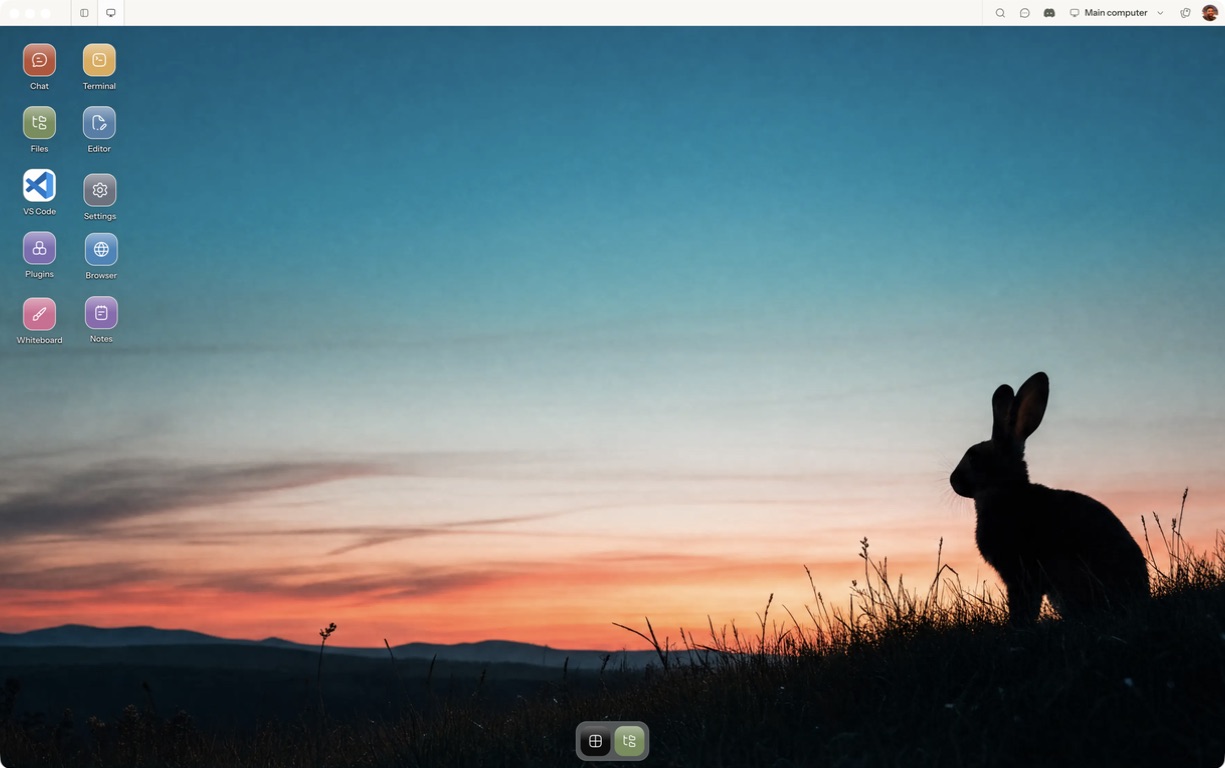
- Follow the quickstart to sign in, choose a computer and complete any required provisioning. To use the native app, follow the desktop installation and approval steps.
- Choose a recipe, read its prerequisites and adapt its task brief. Open a separate session with a small sample project or synthetic input. Configure the agent access needed for that task and make the expected output explicit.
- Verify cited facts and record accepted results, review time, and total usage cost before choosing a platform.
For a worked coding example, use the setup and reconnect walkthrough. Inspect the result before expanding the scope or leaving a longer task unattended.
Open Matrix →Read the quickstart →Current plans and pricing →