The deal room that never forgets
How an agent-native deal room can keep account context, documents, decisions, follow-ups, and human approvals together from first meeting to close.
A deal room that never forgets is not a folder with an AI search box. It is a durable workspace around one opportunity: the people, meetings, messages, documents, decisions, risks, and next actions required to move it forward.
The CRM can remain the system of record. The deal room becomes the place where the team and its agents assemble context, prepare work, and maintain continuity without pretending that every interaction fits into a row of fields.
What belongs in an agent-native deal room?
The workspace should connect five kinds of information:
- Account facts: company, contacts, stage, value, owner, and timeline.
- Conversation history: selected emails, calls, notes, and commitments.
- Working artifacts: research, plans, drafts, proposals, and mutual action plans.
- Decisions: qualification judgments, exceptions, approvals, and changes in strategy.
- Next actions: owner, deadline, dependency, and current status.
Each item should retain a source. Generated summaries are useful navigation, but they should not silently become the record.
Memory should prevent three common failures
Repeating questions the buyer already answered
Before a meeting, the agent can assemble prior requirements, objections, and unresolved questions. The seller reviews the brief rather than searching across inboxes and notes.
Losing commitments between meetings
If a rep promises a security document or a follow-up date, the workspace should capture the commitment, assign an owner, and surface it until resolved.
Rebuilding the story during handoff
When sales hands an account to implementation or customer success, the receiving team should see evidence, decisions, constraints, and open risks—not only the latest CRM fields.
What can an agent do safely?
| Stage | Useful agent work | Human control |
|---|---|---|
| Research | Assemble public and approved internal context | Confirm relevance |
| Qualification | Flag gaps and contradictions | Decide whether to progress |
| Meeting prep | Draft agenda and questions | Choose the conversation strategy |
| Proposal | Assemble approved language and evidence | Approve scope, price, and claims |
| Follow-up | Draft from meeting commitments | Approve recipient and send |
| Handoff | Prepare an implementation brief | Confirm responsibilities |
The agent should make the deal legible. It should not invent certainty or make commercial commitments.
Keep the CRM, add the working layer
A lightweight deal workspace does not need to replace HubSpot, Salesforce, or another CRM. It can read selected context, organize working files, and write back approved updates through bounded workflows.
Salesforce's State of Sales research frames AI adoption alongside persistent concerns about data quality, disconnected systems, and security. Those are not reasons to avoid agents; they are reasons to preserve provenance and review. Explore Salesforce's State of Sales.
Matrix's agent-native deal workspace blueprint describes how deal records, connected files, communication, document assembly, and approvals could work together. It is a product direction, not a claim that Matrix currently replaces a full CRM.
Begin with meeting preparation and follow-up
This is a narrow, measurable first loop:
- Associate approved account sources with the workspace.
- Assemble a one-page pre-call brief.
- Record decisions and commitments after the call.
- Draft a follow-up with evidence from the notes.
- Ask the account owner to approve the message.
- Track whether each commitment is completed.
Measure prep time, factual corrections, overdue commitments, and draft acceptance. Do not start by allowing autonomous outbound communication.
The deal—not the chat—is the durable object
A chat ends. A deal continues across people and weeks. The workspace should let a new participant answer: What does the buyer need? What did we promise? What evidence supports our position? What must happen next?
When those answers remain available and reviewable, the deal room has memory. When the agent can prepare the next step without taking ownership away from the seller, it becomes operational.
Explore Matrix's professional-assistant use case or talk to Matrix about a sales workflow.
Try a first task in Matrix
Turn fictional deal notes into a decision log with source links.
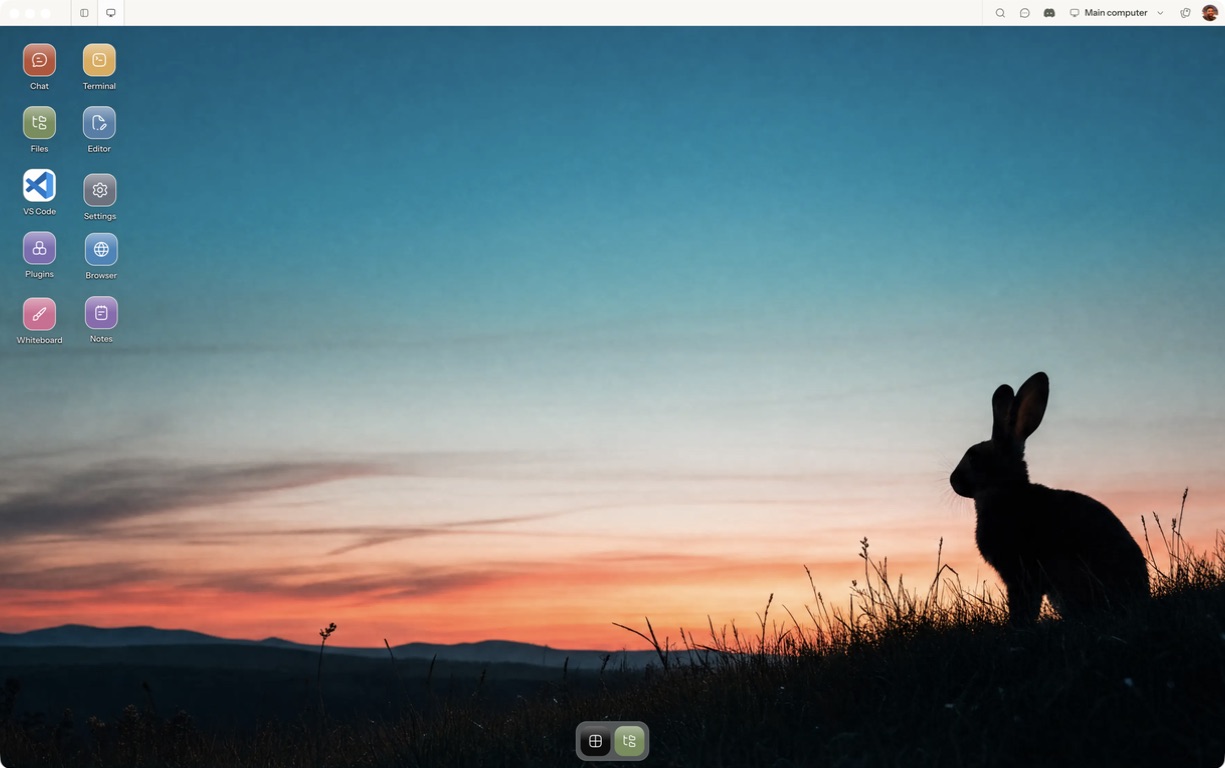
- Follow the quickstart to sign in, choose a computer and complete any required provisioning. To use the native app, follow the desktop installation and approval steps.
- Open a separate session with a small sample project or synthetic input. Configure the agent access needed for that task and make the expected output explicit.
- Check unresolved questions and conflicting claims rather than silently resolving them.
Start with this small prototype, then discuss a scoped pilot for organizational access, integrations or governance. A workflow example does not imply that every proposed team capability is available in the product today.
Open Matrix →Read the quickstart →Current plans and pricing →